
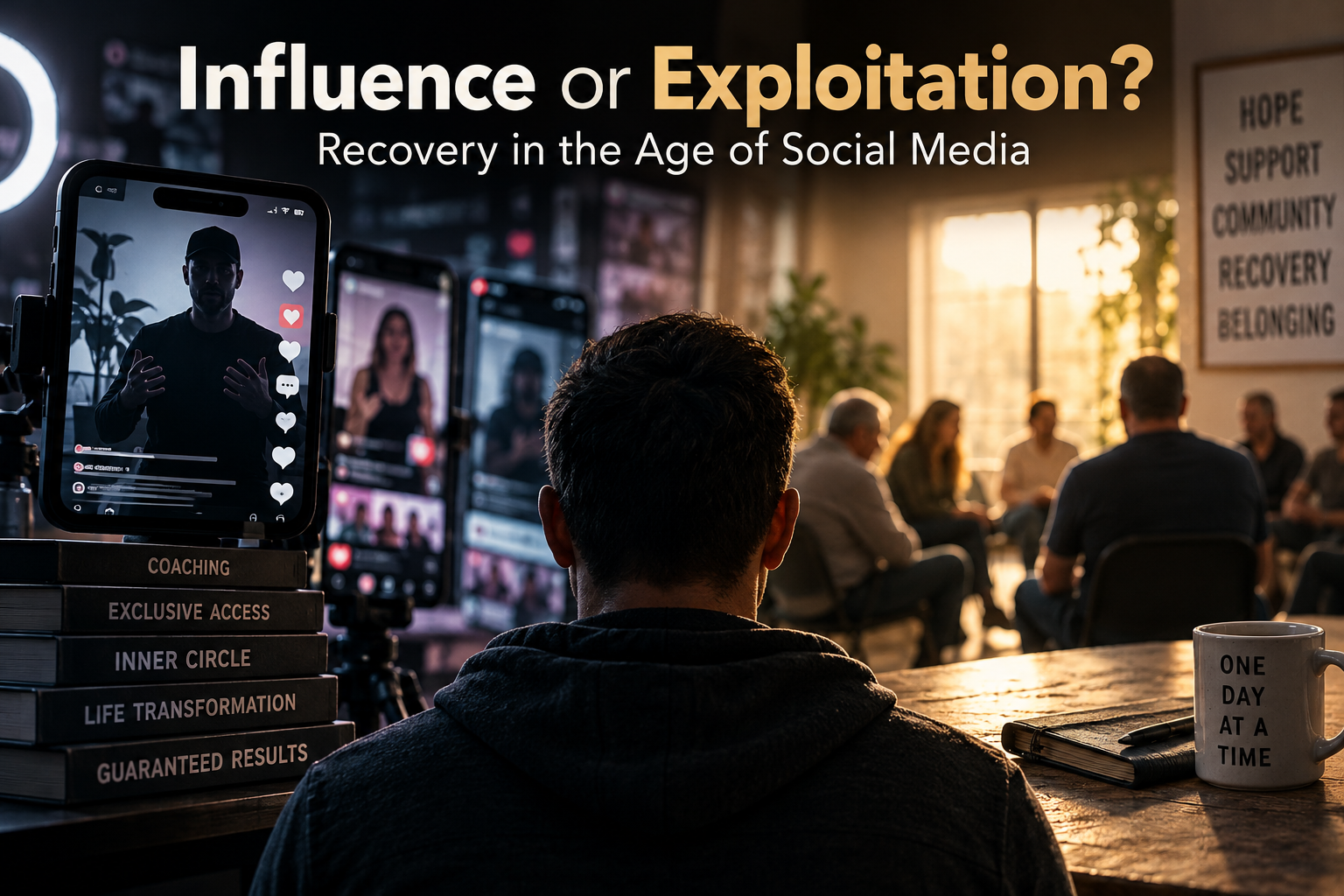
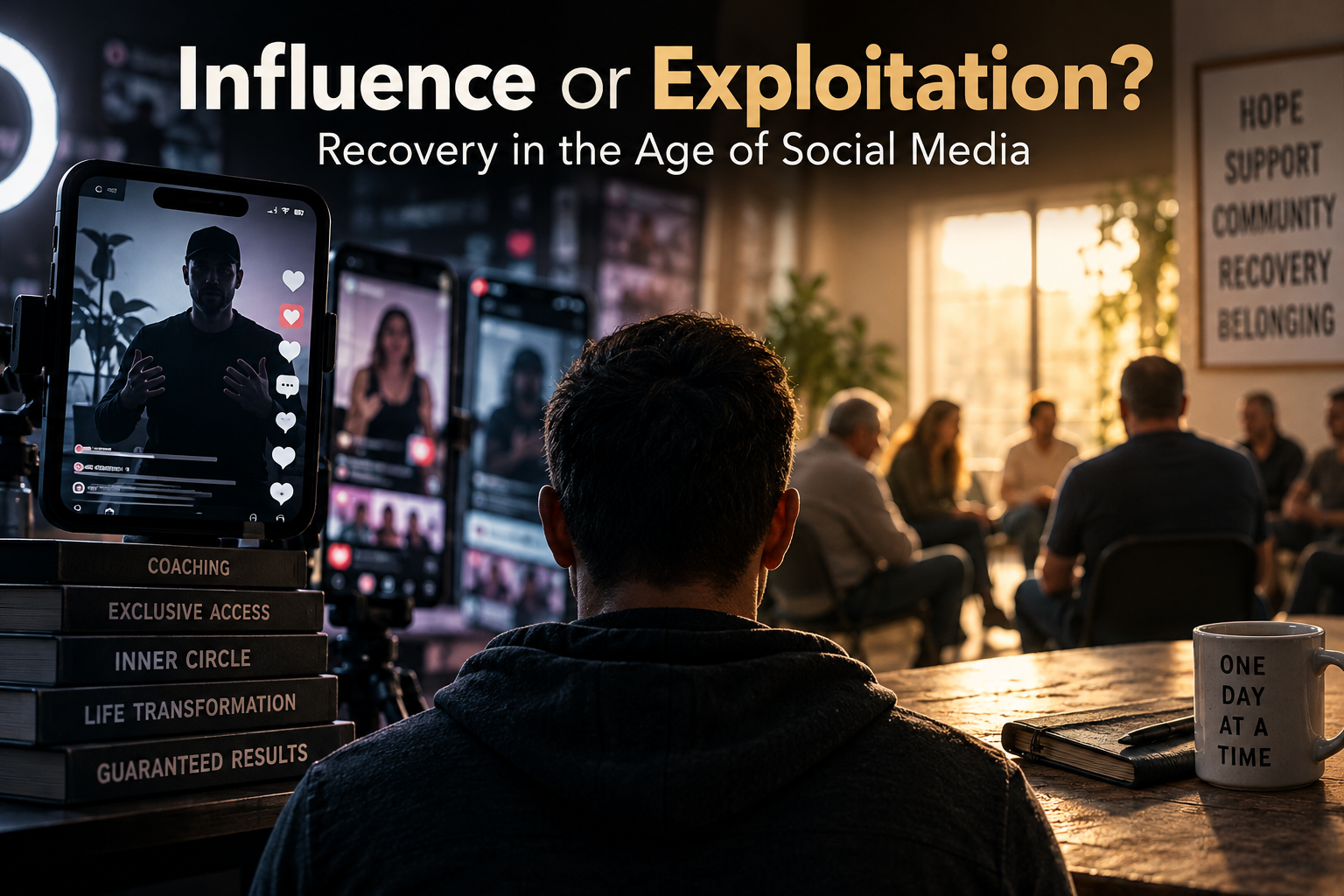
Social media has given rise to a new generation of voices speaking openly about addiction, recovery and mental health. Many are doing meaningful work. They challenge stigma, encourage difficult conversations and reach people who might otherwise struggle in silence.
But as recovery content becomes an increasingly visible part of the influencer economy, an uncomfortable question deserves attention: Where is the line between helping vulnerable people and profiting from their vulnerability?
When did personal experience become professional expertise? And when did helping others become an opportunity to build a following, generate income or gain recognition?
Recovery and mental health are not social media trends. Behind every story is a real person, often with a family searching for answers, and sometimes the stakes are life and death.
Lived Experience Is Valuable. But Is It Expertise?
There is tremendous value in lived experience. Someone who has struggled with addiction can offer understanding, encouragement and perspective that others may find difficult to provide. That shared experience is one of the foundations of peer support and 12-Step recovery.
But there is an important distinction between sharing personal experience and claiming professional authority.
Overcoming addiction does not automatically qualify someone to provide clinical counseling. Likewise, experiencing depression, anxiety or trauma does not make someone an expert in treating those conditions.
Personal experience can inspire others. Professional expertise requires appropriate education, training, credentials and accountability.
Both have a place in recovery. Neither should be confused with the other.
The concern is not that people in recovery are sharing their stories. It is what happens when those stories become the foundation for unsubstantiated claims, questionable advice or businesses targeting people who may be desperate for help.
Recovery, Humility and the Influencer Economy
Traditional 12-Step recovery emphasizes principles such as humility, service, anonymity and helping others without seeking personal recognition.
Sponsorship, for example, is built around one person sharing experience, strength and hope with another. It is not intended to be a commercial relationship or an opportunity to establish personal authority over someone else's recovery.
Social media, however, often rewards a very different set of behaviors.
Visibility drives engagement. Controversy attracts attention. Personal branding encourages individuals to position themselves as authorities, sometimes regardless of their qualifications.
The tension is difficult to ignore.
Recovery encourages us to examine our egos. The influencer economy often encourages us to feed them.
That does not mean people in recovery should remain silent, avoid public advocacy or refuse opportunities to earn a living in the recovery field.
Many qualified professionals, peer support specialists and responsible advocates use social media to educate, encourage and connect people with legitimate resources.
The difference lies in their intentions, their qualifications and, most importantly, their conduct.
Are they using their platforms to help people become healthier and more independent? Or are they building an audience that increasingly depends on them?
Recognizing the Warning Signs
Not every recovery influencer is exploiting their audience. But people seeking help, along with their families, should approach online recovery advice with the same care they would use when evaluating any other health-related service.
Potential warning signs include:
Unsubstantiated claims of expertise: Individuals presenting themselves as counselors, treatment specialists or recovery authorities without appropriate qualifications or transparency about their training.
Promises of guaranteed results: Programs or coaching services suggesting there is one universal solution to addiction or mental health challenges.
Discouraging professional care: Influencers who dismiss evidence-based treatment, prescribed medications or qualified mental health professionals in favor of their own methods.
Personality-driven dependency: Communities that revolve around unquestioning loyalty to one individual rather than encouraging independent decision-making, healthy relationships and broader support networks.
Exploiting vulnerability for profit: High-pressure sales tactics, expensive access packages or exclusive memberships marketed to people experiencing addiction, emotional distress or personal crisis.
Charging for legitimate professional services is not inherently unethical. Counselors, treatment providers, certified peer support specialists and others working in recovery deserve fair compensation for their work.
The concern arises when financial incentives begin to outweigh the well-being of the people seeking help.
Transparency, professional boundaries and accountability matter far more than follower counts.
Are We Offering Hope or Selling an Image?
Perhaps the most important questions are also the simplest.
Is this person offering hope or selling an image?
Are they empowering people to take responsibility for their recovery, or encouraging dependence on a particular personality?
Are they connecting people with qualified professionals, established recovery communities and meaningful support systems, or simply directing them toward another subscription, coaching package or paid program?
And when someone reaches out in genuine crisis, is the first response compassion or a sales pitch?
These questions matter because addiction and mental health challenges can leave people particularly vulnerable to promises of quick solutions.
Someone searching for help may not know how to distinguish a qualified professional from a persuasive online personality.
A compelling personal story can create trust. But trust should never be mistaken for proof of expertise.
Recovery Happens Beyond the Screen
An influencer's value should not be measured by audience size, engagement statistics or the ability to attract attention.
It should be measured by the integrity of their actions and the meaningful difference they make in people's lives.
The reality is that lasting recovery rarely looks glamorous.
It happens in meeting rooms, treatment centers, sober living homes and ordinary households. It happens through difficult conversations, daily accountability, rebuilding relationships and learning how to live differently.
It happens when someone answers the phone at 2 a.m., listens without judgment and asks for nothing in return.
These moments may never generate likes, shares or followers. But they represent the kind of service and human connection that recovery communities have relied upon for generations.
Social media can amplify those principles. It should not replace them.
Putting People Before Platforms
We need more people willing to speak openly about addiction, recovery and mental health. Silence and stigma have prevented too many individuals from seeking help.
Responsible advocacy can save lives, strengthen communities and remind people that recovery is possible.
But visibility brings responsibility.
Those who choose to build platforms around recovery should be willing to acknowledge the limits of their expertise, respect professional boundaries and place the well-being of others ahead of personal recognition.
And those seeking guidance deserve to know whether the person offering it is sharing experience, providing qualified professional services or selling something.
Ultimately, recovery should be guided by humility, integrity, compassion and service — not popularity.
Recovery should never become a popularity contest. And vulnerable people should never become a marketing opportunity.